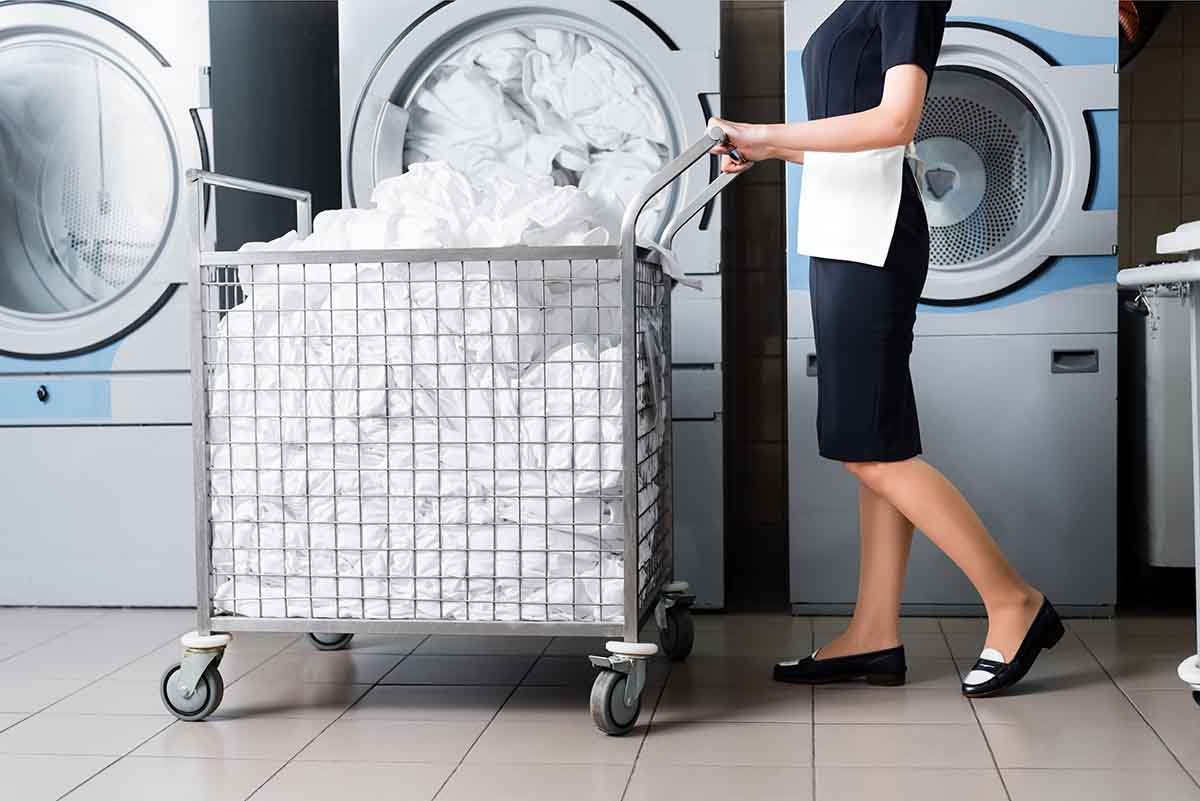
Clean-looking linens aren’t necessarily the same as properly processed linens.
For hotels, medical offices, dental practices, gyms, spas, restaurants, senior living facilities and other businesses, linen sanitation is more than a housekeeping concern. Towels, sheets, robes, uniforms and other reusable textiles repeatedly come into contact with people, surfaces, moisture, bodily fluids, food and other sources of soil and contamination.
When linens aren’t handled, laundered, dried, transported and stored properly, the consequences can extend beyond an unpleasant towel or stained sheet. Poor linen practices can increase contamination risks, trigger customer or patient complaints, create potential compliance concerns and damage a business’s reputation.
That’s why businesses with substantial linen needs increasingly rely on a professional commercial laundry service rather than treating laundry as an ordinary household chore.
LaundryPro, the premier commercial laundry service in Los Angeles, provides professional linen and towel processing for businesses throughout Southern California.
What Is Linen Sanitation?
Linen sanitation is the process of properly handling, laundering, drying, transporting and storing reusable textiles to reduce soil and microbial contamination while helping prevent clean items from being recontaminated.
Effective linen sanitation isn’t determined by a single factor such as using hot water or adding bleach.
The Centers for Disease Control and Prevention notes that the effectiveness of laundering depends on multiple factors, including time and temperature, mechanical action, water quality, load volume, degree of soiling and the commercial equipment being used.
Just as important is what happens before and after the wash cycle.
Soiled textiles need to be handled appropriately, and clean linens need to remain clean during sorting, storage and transportation.
In other words, linen sanitation is a process, not simply a wash cycle.
Why Improper Linen Sanitation Can Become a Business Liability
The risk varies considerably by industry.
A medical office has different requirements from a hotel, and a restaurant’s table linens present different concerns than towels used at a fitness center.
But they have something important in common: customers, guests, patients and employees expect textiles provided by a business to be clean.
Improper linen handling can contribute to:
- Cross-contamination between soiled and clean textiles
- Persistent stains, odors and residue
- Customer, guest or patient complaints
- Premature deterioration of linens and towels
- Operational disruptions and linen shortages
- Potential sanitation or regulatory concerns
- Negative reviews and reputational damage
For businesses that depend on clean textiles every day, linen quality becomes part of the customer experience and, in some industries, part of a broader infection-control or sanitation program.
Clean and Soiled Linens Should Remain Separate
One of the most fundamental principles of professional linen handling is separation.
The CDC recommends containing soiled healthcare textiles appropriately and handling them in ways that minimize unnecessary contact or dispersal of contaminants. Clean textiles should then be packaged, transported and stored in ways that protect them from dust, soil and other potential contamination.
Why does that matter?
Because properly washing a towel doesn’t accomplish much if the clean towel is subsequently placed on a contaminated surface or mixed with soiled textiles.
Professional commercial linen service therefore requires attention to the entire workflow:
Soiled linen → collection → transportation → sorting → laundering → drying → folding → clean storage → delivery
Every stage matters.
Proper Linen Sanitation Requires More Than Hot Water
It’s tempting to assume that hotter water automatically means properly sanitized laundry.
The reality is more nuanced.
For healthcare laundry, CDC guidance states that when hot-water cycles are used, washing with detergent at 160°F or higher for at least 25 minutes is one recognized approach. The CDC also notes that lower-temperature processes can reduce microbial contamination when washer cycles, detergent and laundry additives are carefully controlled.
That distinction is important.
Effective professional laundering depends on the combination of the wash formula, time, temperature, mechanical action, chemicals, water characteristics, soil level and proper drying rather than any single setting on a washing machine.
Businesses should also follow textile manufacturers’ care requirements and any sanitation or infection-control requirements applicable to their particular industry.
Healthcare Linen Service Requires Special Attention
Healthcare environments illustrate why linen sanitation needs to be treated seriously.
The CDC states that soiled healthcare textiles such as bedding, towels and patient or resident clothing can be contaminated with pathogenic microorganisms. It also notes that the risk of disease transmission is negligible when those textiles are handled, transported and laundered safely.
That makes proper process especially important for organizations handling healthcare-related textiles.
Medical and dental offices, senior living communities and other care providers should establish linen procedures appropriate to their operations and comply with applicable healthcare, infection-control and regulatory requirements.
LaundryPro provides commercial laundry services for hospitals, medical offices, dental practices, nursing homes, senior living and assisted-care facilities. Businesses with specialized healthcare laundry requirements should discuss those requirements directly with LaundryPro to determine the appropriate service program.
Hotels Have Linen Sanitation Risks Too
Healthcare isn’t the only industry where linen cleanliness matters.
Hotel sheets, pillowcases, bath towels, hand towels, washcloths, robes and pool towels pass through a continuous cycle of guest use and laundering.
A towel with an odor, a stained sheet or bedding that doesn’t appear fresh can immediately affect a guest’s perception of the property.
And today, that experience doesn’t necessarily remain between the guest and the front desk. It can become an online review.
Professional commercial linen and towel laundry service helps hospitality businesses establish a more consistent system for processing large volumes of sheets, towels, pillowcases, blankets, robes and other linens.
Gyms, Spas and Wellness Businesses Face High Textile Turnover
Fitness and wellness businesses present another challenge: frequency.
Towels may be used throughout the day and quickly returned for laundering. Spas and salons can generate towels, sheets, robes and treatment linens that come into contact with oils, lotions, cosmetics, perspiration and other substances.
When textile volume rises, an ordinary washer and dryer can become a bottleneck.
As we explained in our guide to commercial laundry vs. residential machines, commercial laundry isn’t simply household laundry on a larger scale. Businesses require processing capacity, consistency and workflows designed around ongoing operational demand.
The Cost of Getting Linen Sanitation Wrong
| Linen Problem | Potential Business Impact |
| Improper separation | Cross-contamination risk |
| Inadequate processing | Soil, odor or contamination may remain |
| Incomplete drying | Moisture and quality problems |
| Poor clean-linen storage | Recontamination after laundering |
| Inconsistent processing | Variable linen quality |
| Linen shortages | Operational disruption |
| Stains or odors | Customer complaints |
| Poor guest experience | Negative reviews and reputational damage |
The important point is that laundry quality doesn’t end when the washer stops.
A professional linen sanitation program considers what happens to textiles from the moment they’re collected until clean linens are returned to use.
What Should Businesses Look for in a Commercial Linen Service?
Businesses evaluating a commercial laundry provider should ask about more than price per pound.
Consider:
- Experience with your type of business
- Linen and towel handling procedures
- Processing capacity
- Pickup and delivery schedules
- Turnaround times
- Procedures for keeping client textiles separate
- Ability to accommodate changing volume
- Handling of special laundry requirements
- Quality-control procedures
- Pricing and contract requirements
LaundryPro’s commercial programs are tailored to individual business needs. LaundryPro also keeps a client’s linens and towels exclusively theirs rather than mixing or rotating them among customers.
That can be particularly valuable for businesses that have invested in specific linens or need greater consistency in their textile inventory.
Why Businesses Choose LaundryPro for Commercial Linen Service
LaundryPro serves hotels, hospitality businesses, gyms, wellness studios, medspas, medical and dental offices, restaurants, senior living facilities, vacation rentals and other organizations.
Commercial loads can range from approximately 30 to 3,000 pounds, allowing LaundryPro to accommodate businesses with very different laundry volumes.
Businesses can also arrange pickup and delivery, reducing the need to devote employees, equipment and valuable facility space to processing linens internally.
Most importantly, commercial laundry is LaundryPro’s business.
As the premier commercial laundry service in Los Angeles, LaundryPro provides professional commercial linen and towel processing designed around the needs, volume and schedule of each client.
Frequently Asked Questions About Linen Sanitation
What is linen sanitation?
Linen sanitation is the proper handling, laundering, drying, transportation and storage of reusable textiles to remove soil, reduce microbial contamination and help protect clean items from recontamination.
Can improperly cleaned linens spread contamination?
Soiled textiles can contain microorganisms. According to the CDC, disease-transmission risk from healthcare textiles is negligible when they are handled, transported and laundered safely, which underscores the importance of proper linen-management procedures.
Does hot water sanitize commercial laundry?
Temperature is one component of effective laundering, but it isn’t the only one. Time, mechanical action, detergents and other chemicals, water quality, load volume, soil level and proper drying can all affect the laundering process.
What businesses need professional linen sanitation?
Hotels, medical and dental offices, senior living facilities, gyms, spas, salons, restaurants, vacation rentals and other businesses with substantial quantities of reusable linens or towels may benefit from professional commercial laundry service.
What is healthcare linen service?
Healthcare linen service involves processing reusable textiles used by healthcare or care-related organizations. Appropriate procedures depend on the facility, textile type, intended use and applicable infection-control and regulatory requirements.
Why outsource linen laundry instead of washing it in-house?
Outsourcing can provide professional processing capacity while reducing the need for businesses to purchase and maintain laundry equipment, dedicate employees to laundry, manage fluctuating volume and devote facility space to an in-house laundry operation.
Protect Your Linens and Your Reputation
A clean towel, sheet or robe may seem like a small detail.
To the person using it, it isn’t.
Linens can influence how guests judge a hotel room, how members perceive a gym, how clients experience a spa and how patients view a healthcare environment.
Proper linen sanitation requires more than putting textiles through a washing machine. It requires a consistent process for handling, cleaning, drying, protecting and returning those textiles to service.
LaundryPro, the premier commercial laundry service in Los Angeles, provides professional commercial laundry and linen service for businesses that need dependable processing without the burden of managing laundry in-house.
Contact LaundryPro to discuss a commercial linen program designed around your business, textile volume, pickup schedule and operational needs.